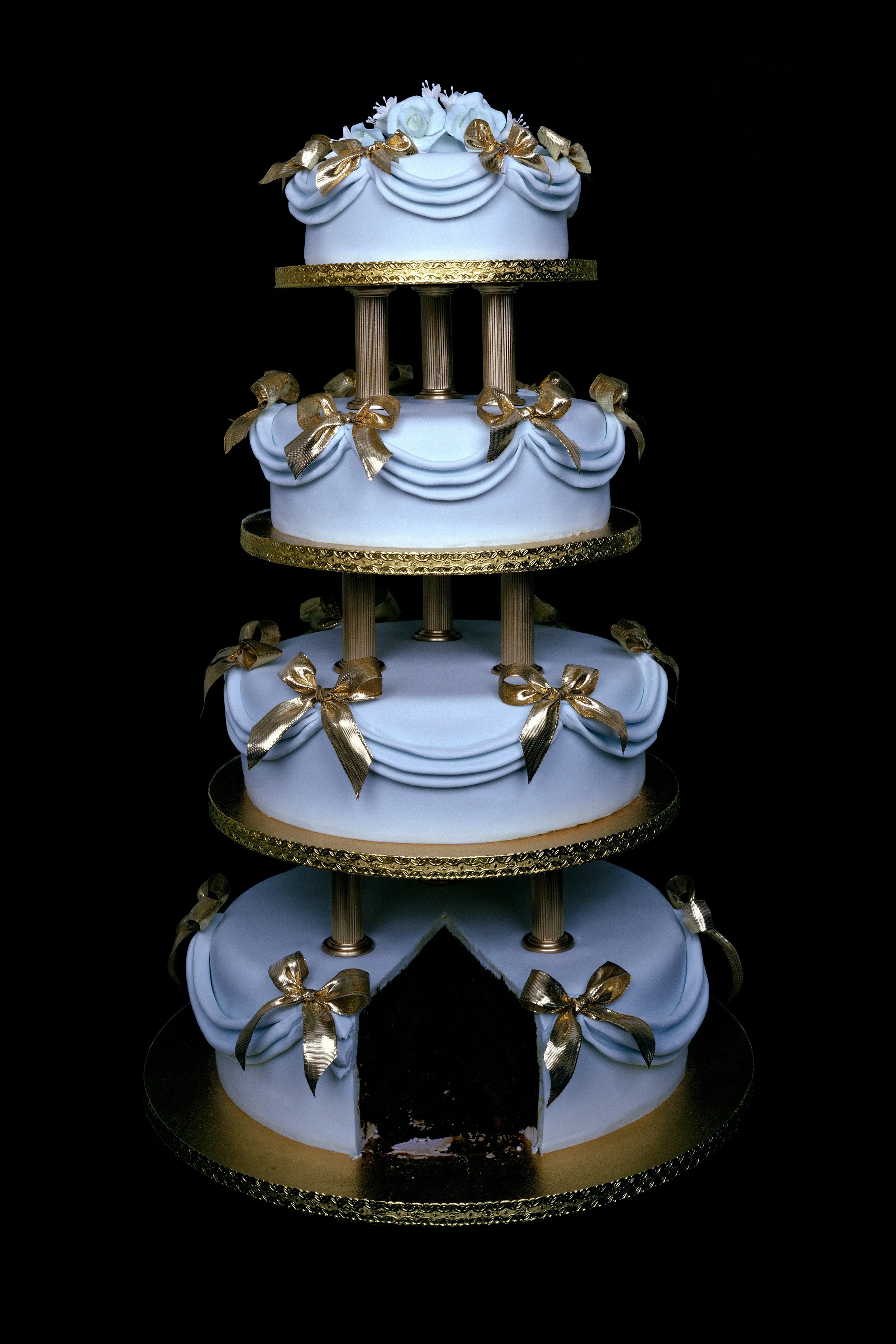
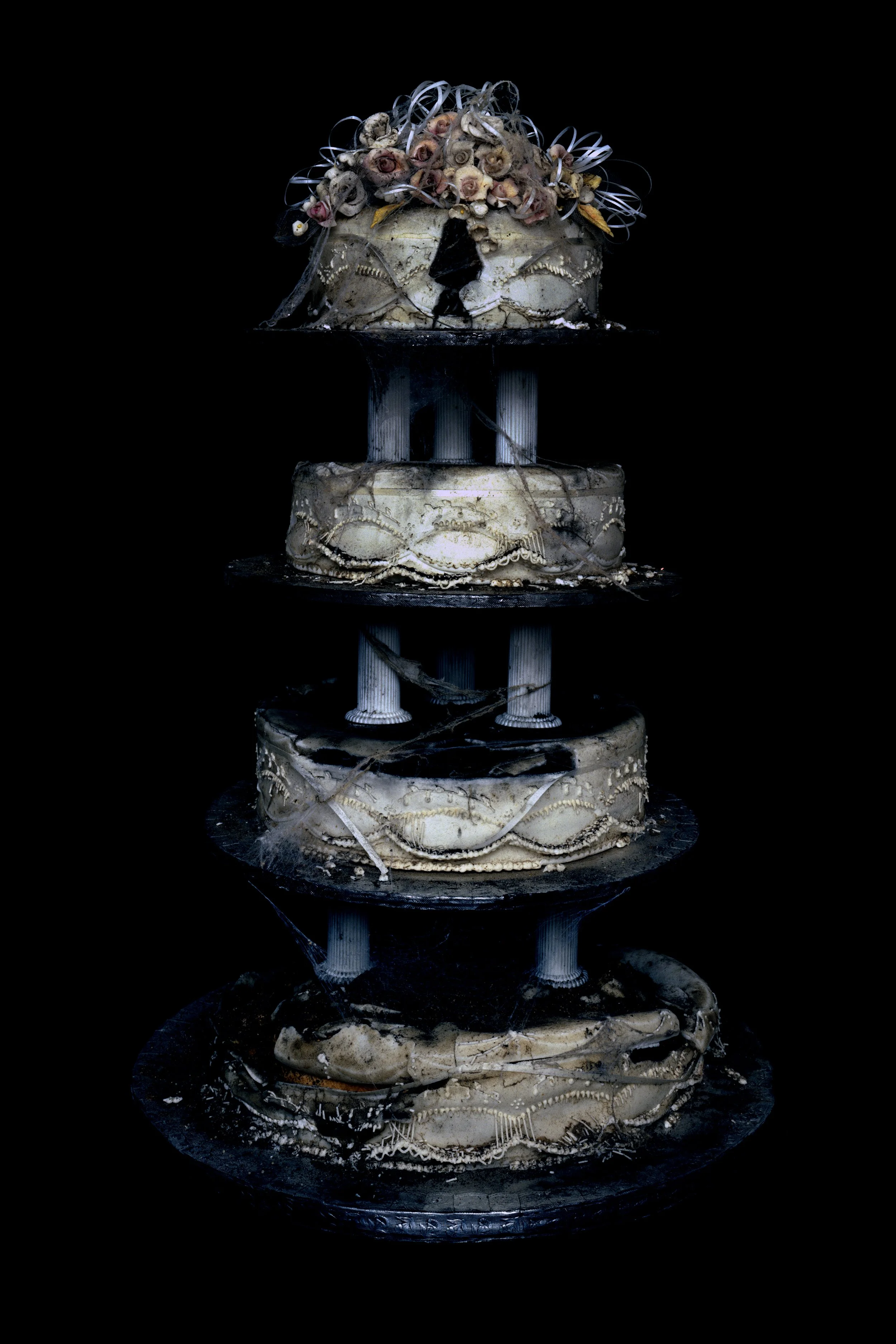
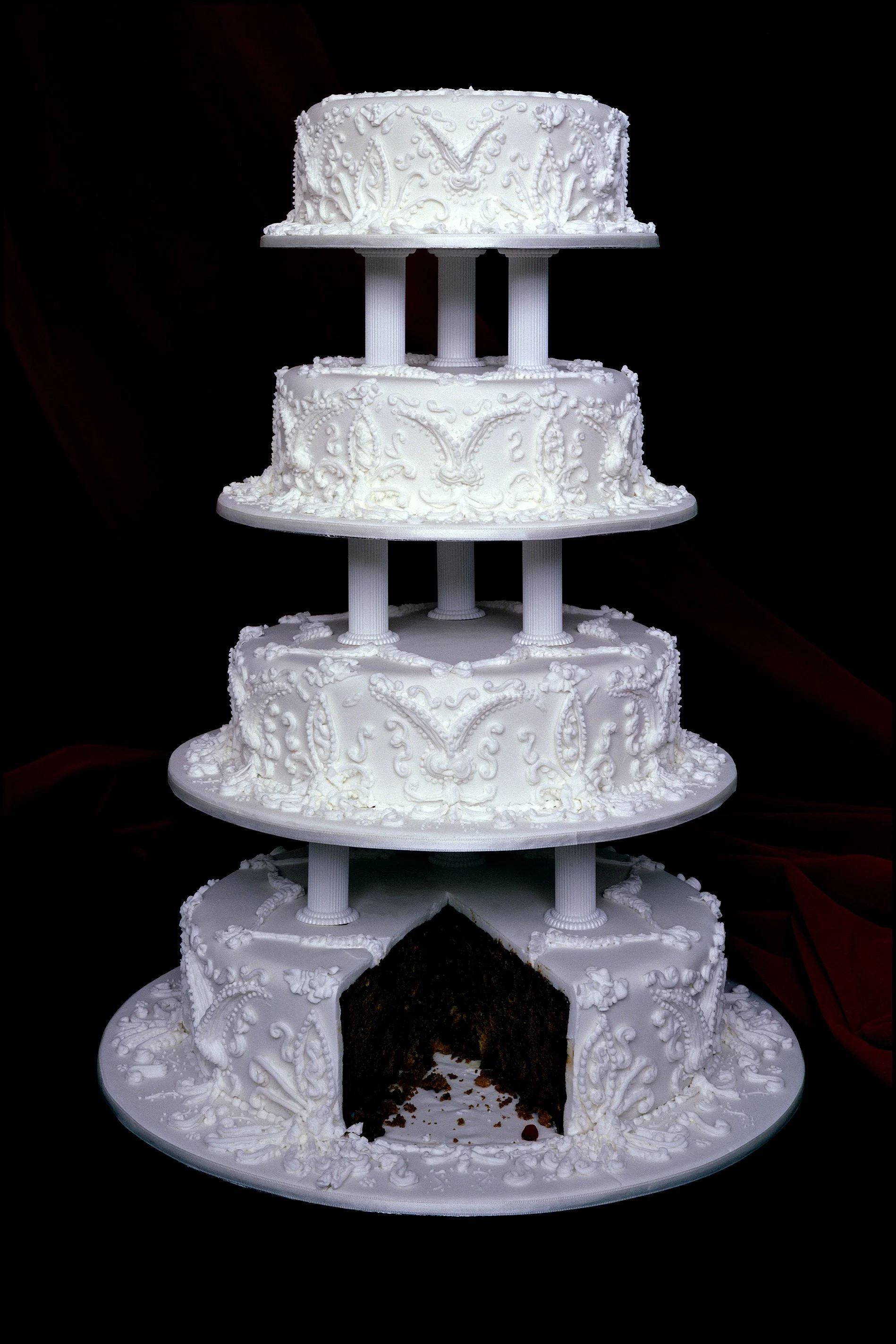
Traditionally, Vanitas include symbols of passing time above all—fallen petals, skulls and burning candles, bruised fruits, the scattered remains of a sumptuous banquet—alongside emblems of an industrious life: books, scientific instruments and artists' tools; and the accoutrements of worldly luxury and idle pursuits: cards, coins, brimming goblets, musical instruments. A wedding cake can symbolise Vanitas because it embodies life in flower and, years later, ruin and death. Its frivolous ribbons and frothy trailing trimmings of icing roses echo the ornamental fripperies of Vanitas paintings. Preserved sugar perfection turns towards decomposition.
Anne MacDonald
Vanitas draws on several sources, which include Seventeenth Century Dutch Vanitas paintings – reminders of the evanescence of life – in which faint hints of decay can be detected in food as well as flowers. A literary source is Miss Havisham’s ghastly wedding banquet in Great Expectations, where the passage of time and the work of spiders have reduced the celebratory cake to a gothic ruin. MacDonald has a facility for extracting the essence of meaning from her sources by the compositional device of relocation. Her wedding cake, having been ‘consumed’ by time, is draped in cobwebs and cast with the blue of decomposition. A sumptuous, seductive image which carries its own reminder of corruption, like the faint bruise on a peach.
Victoria Hammond